
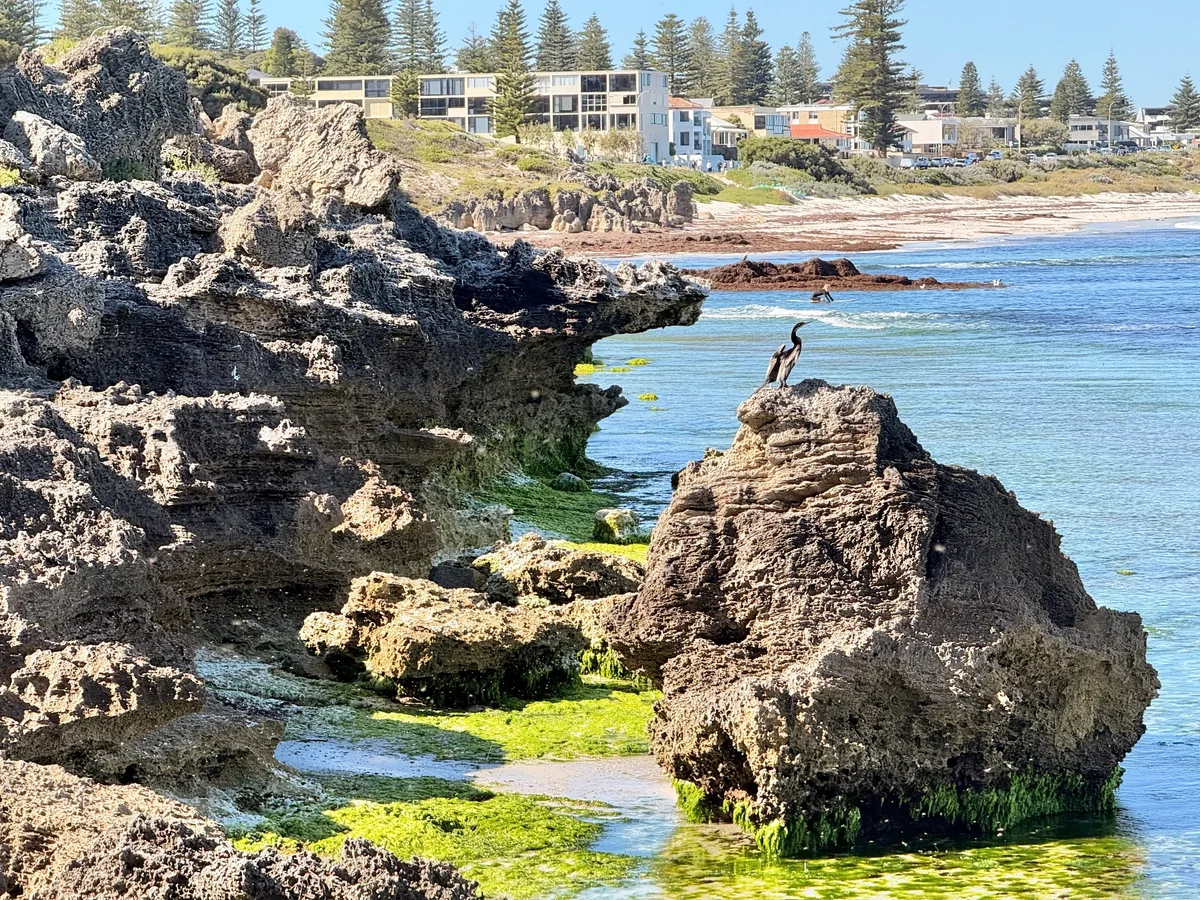
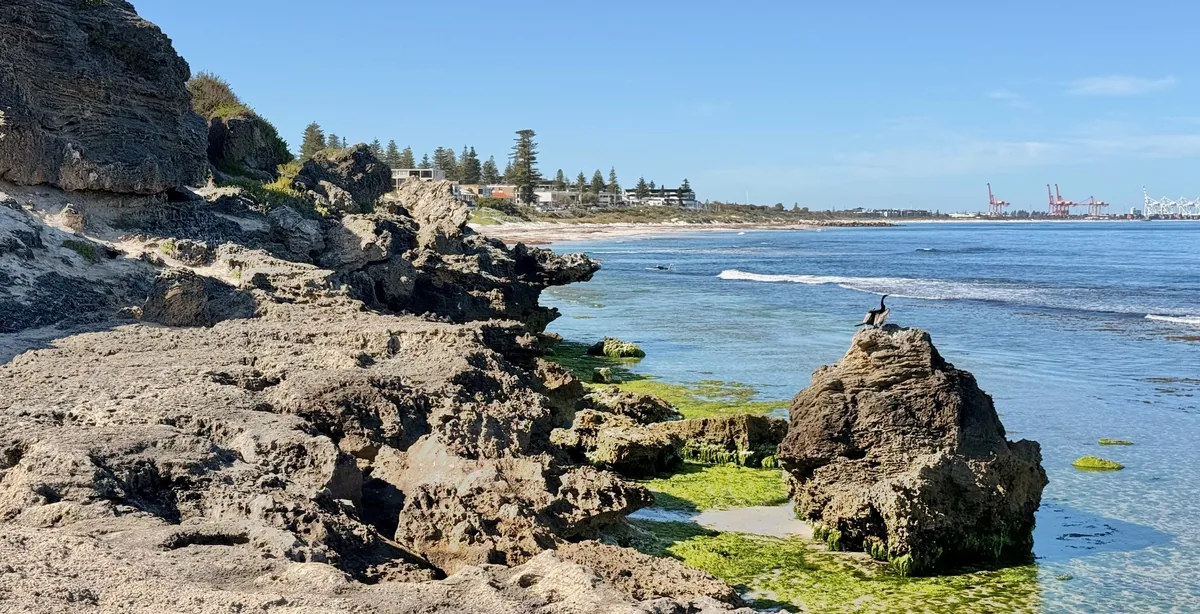
Follow the public path south of Cottesloe Surf Life Saving Club towards the sundial. The limestone headland looks across the Cove and towards Fremantle.
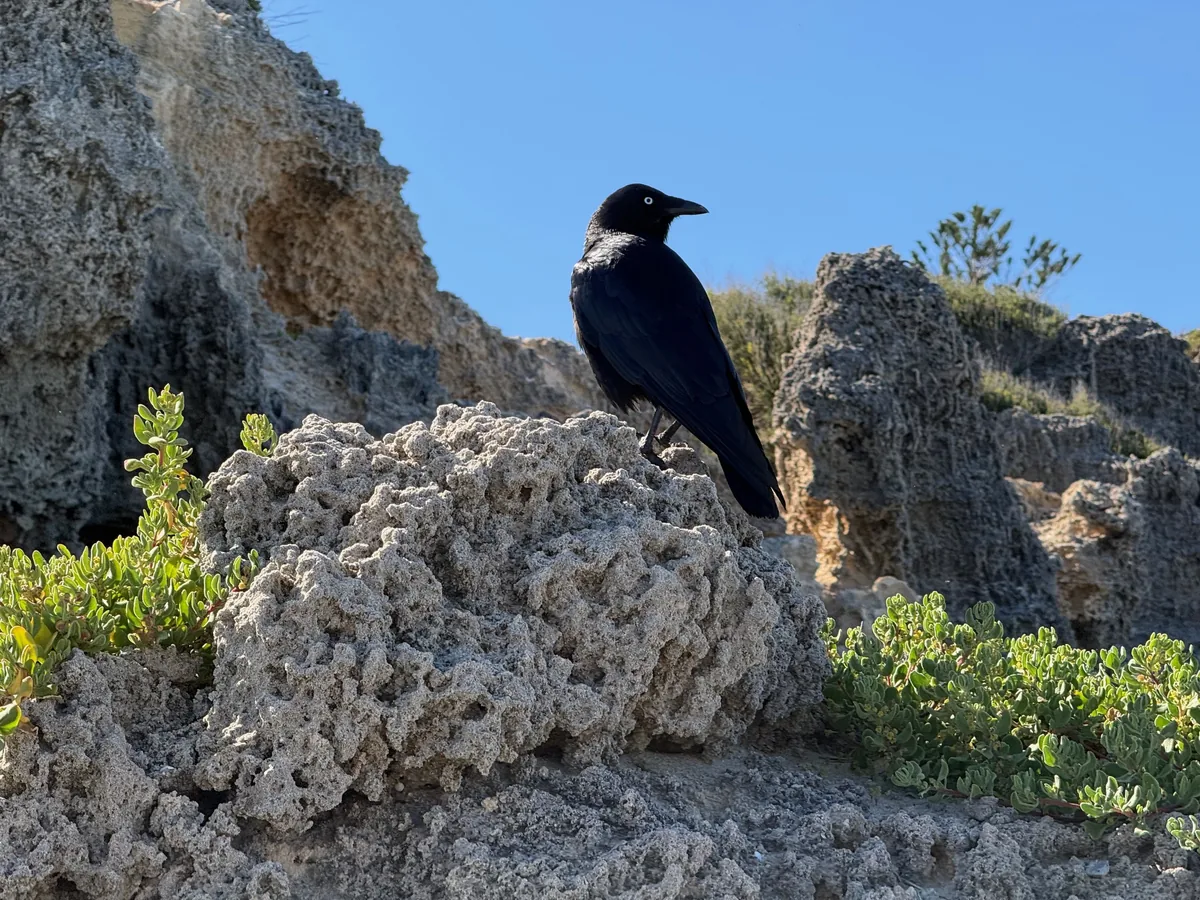
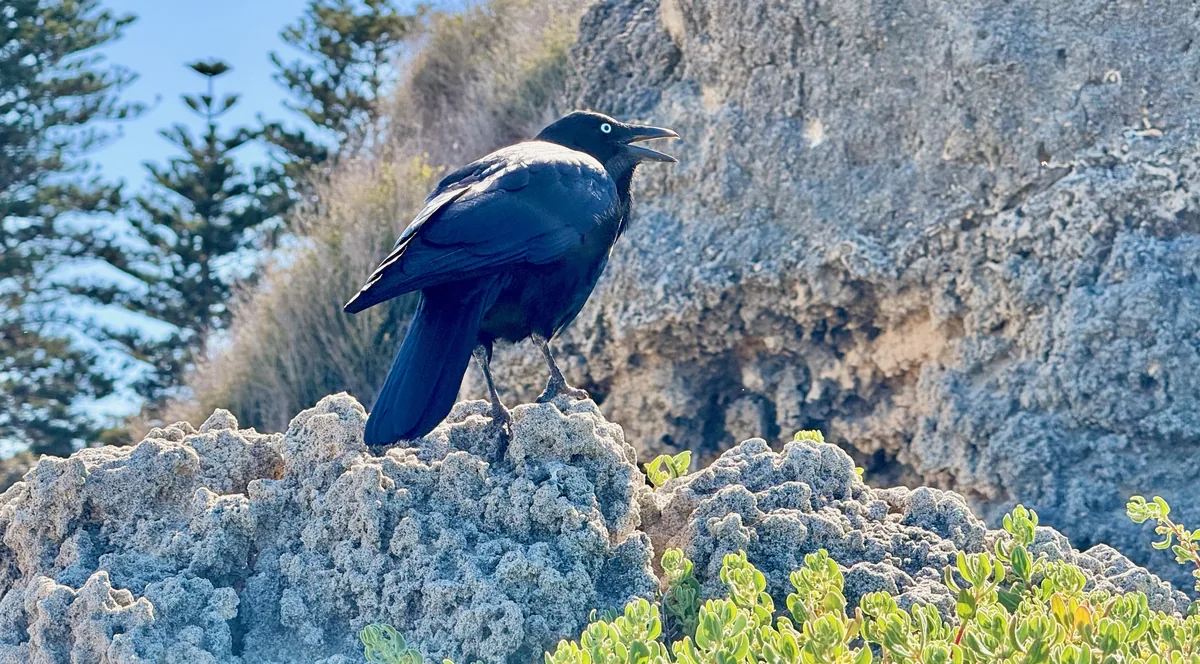
Before Cottesloe was a beach suburb, Noongar people came to Mudurup during Birak and Bunuru - roughly December to March - when seasonal fish including whiting, mullet and salmon were part of life along this coast. The Town records Mudurup as an important ceremonial and initiation place, where initiates learnt about Kurannup - the destination of spirits beyond the western sea, associated with the waters and islands towards Garden Island and Wadjemup / Rottnest Island. Cultural accounts describe ravens helping carry spirits towards the setting sun.
Mudurup is also one of the traditional haunts, or “runs”, of the Wardung - the Australian raven (crow) - and the story of Kadjil the Crow Man. In traditional accounts, the Crow Man was a powerful sorcerer who could transform between human and crow form and understand signs of approaching weather and seasonal fish. A later oral tradition became entwined with the real-life story of Johnny Cudgel (Kudjil), a Noongar man and prisoner who became known for defying colonial authorities. Stories passed down by Noongar Elders tell of his spirit escaping Wadjemup in the form of a crow and returning to the mainland, with another version placing the Crow Man in a cave at Mudurup performing ceremonies. Researchers note there is no documentary evidence for an escape from Wadjemup, but the story remains an important part of the oral history passed through local Noongar families.
Look at the rocks themselves too. Mudurup is part of the Tamala Limestone that forms Cott's headlands and offshore reefs - ancient coastal dune sands gradually cemented into stone. From a distance, the limestone ledge and pipe-like formations beneath it have been described as resembling a shark with its mouth open.
The vegetation around you has its own recovery story. Cottesloe Coastcare has worked here for years, and a major 2009-10 project tackled weeds and rabbits, added protective fencing and planted around 4,000 local native plants grown from seed collected by volunteers. That restored coastal planting now softens the paths around the headland.
Stay on the formed paths and behind the barriers. The exposed limestone outcrops are not open for public access and can be unstable. From the safe paths you can still look across the Cove, explore the Cottesloe Sundial and follow the coast towards South Cott - or turn north for the groyne and main beach.
For more information on the cultural significance of Mudurup and the stories connected with it, follow the links below:
Town of Cottesloe - Mudurup Rocks
Cottesloe Coastcare - Kadjil the Crow Man
Indigenous significance of Mudurup Rocks - Ken Macintyre and Dr Barb Dobson