
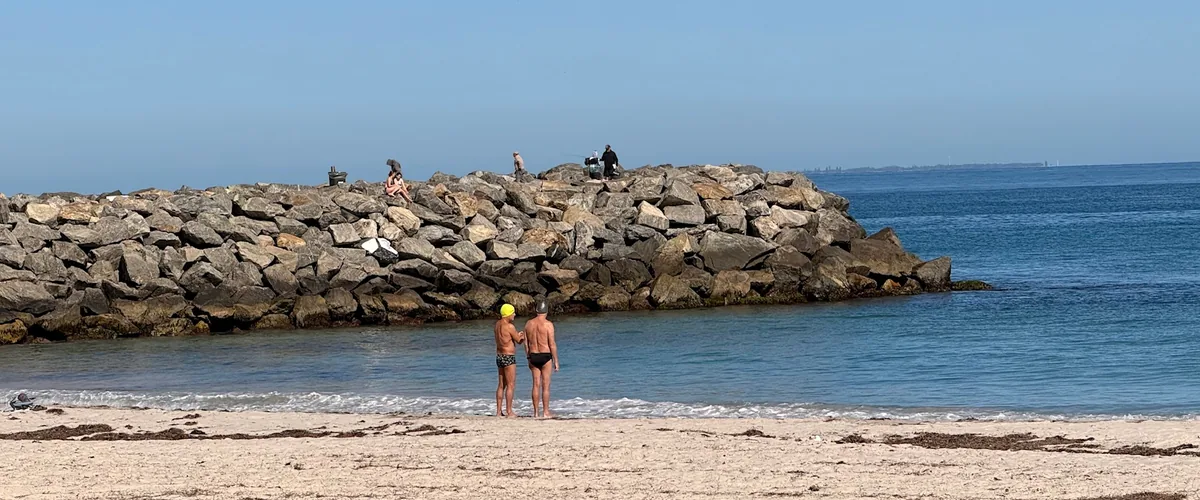
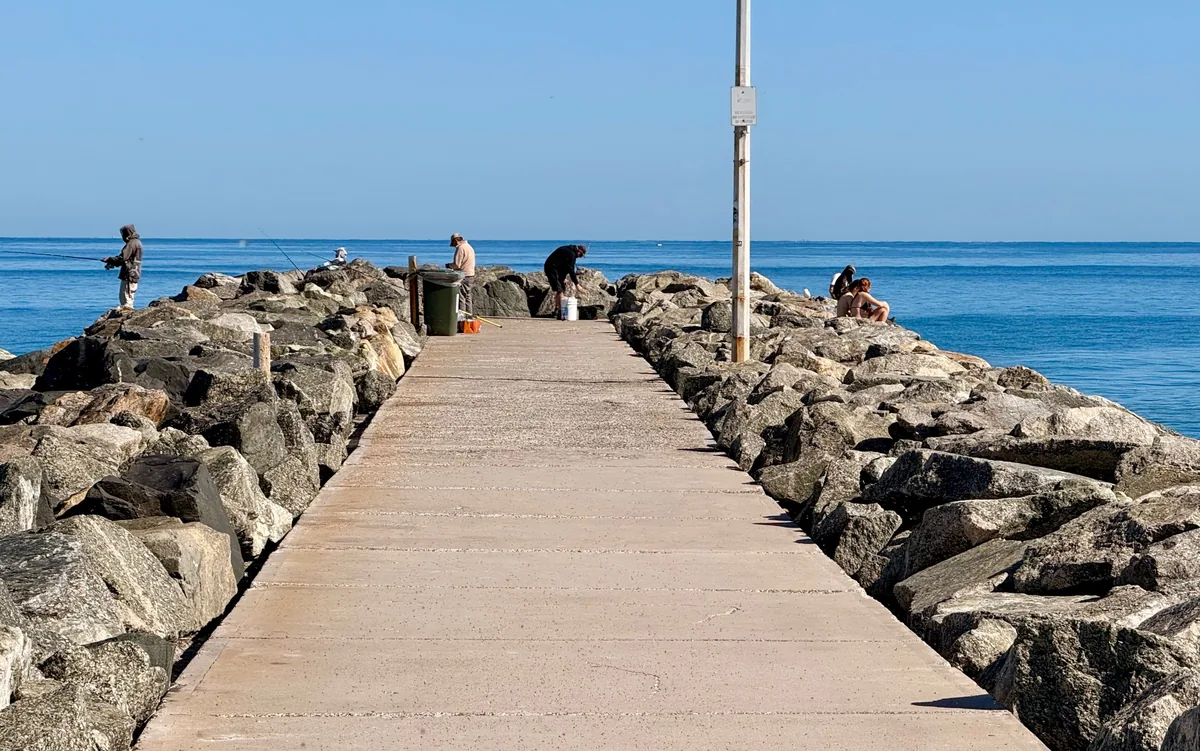
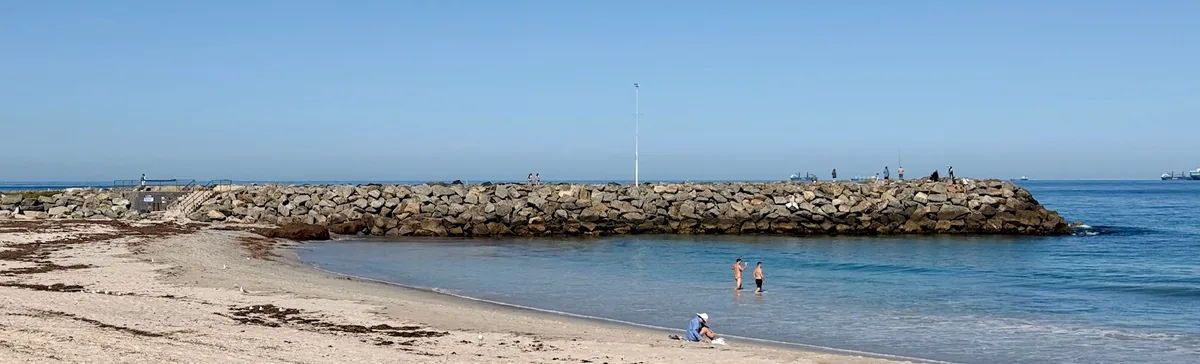
Approach along the main beach or the path below Mudurup Rocks. The groyne begins at the southern end of the main beach.
Beach erosion had troubled Cottesloe for decades when UWA coastal engineer Dr Richard Silvester studied the problem and designed a rock groyne at Mudurup. Built around 1960, it interrupted the movement of sand along the coast and trapped large quantities beside the main beach. The engineering worked: the broad sandy beach immediately north of the groyne owes much of its present form to this intervention.
But it also changed an older landscape. Mudurup is a significant Whadjuk Noongar ceremonial, spiritual and fishing place, meaning “place of the whiting”. Whadjuk knowledge holders have described the original site as extending across rocky shoreline and reef both north and south of today's groyne; the groyne's construction altered that shoreline and effectively divided parts of the earlier landscape.
Today the groyne is part lookout, part fishing spot and part Cott meeting place. During Sculpture by the Sea it becomes part of the exhibition walk, while year-round it's a great spot to turn your camera back towards Indiana, the lawns and that unmistakable line of Norfolk pines. The sheltered sandy corner beside it is popular with swimmers when conditions are calm.
Enjoy the views from the formed groyne, but watch the conditions - the outer section can be wet and wave-washed when the ocean is lively.
Town of Cottesloe - Mudurup Rocks
Sculpture by the Sea, Cottesloe